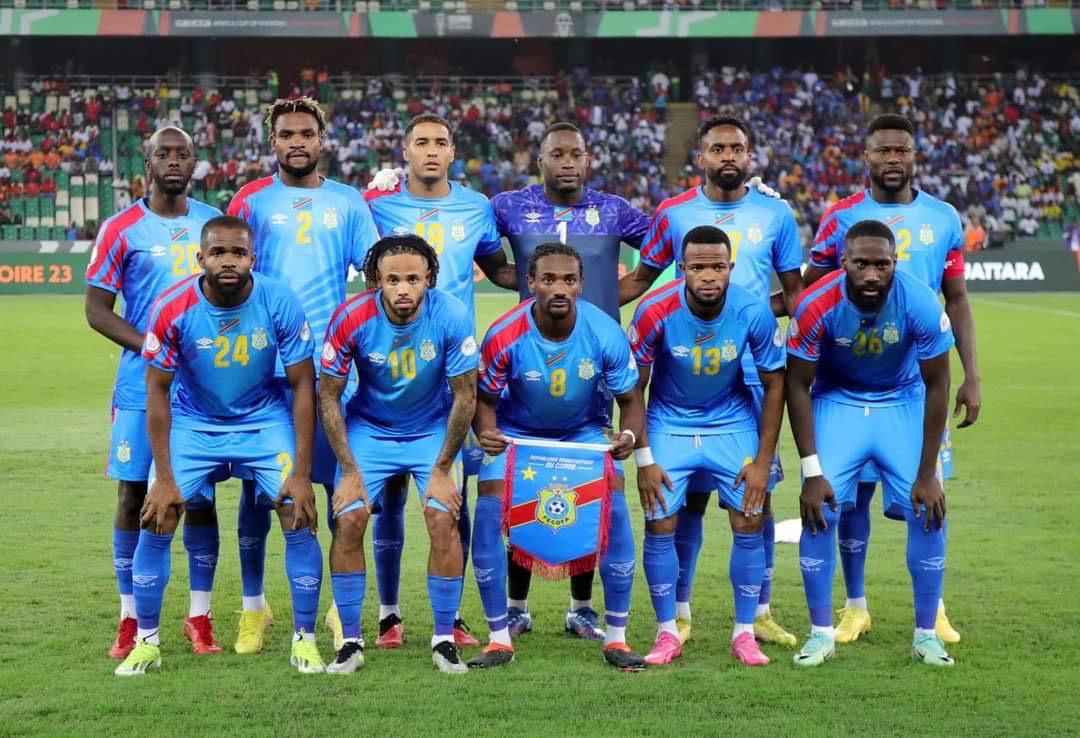
Congolese Football: Achievements That Should Not Hide the Challenges
The Democratic Republic of the Congo’s historic run at the 2026 FIFA World Cup has filled the nation with immense pride and renewed hope that Congolese football can once again establish itself among the world’s elite. Beyond the remarkable performances on the pitch, however, this achievement should also serve as the starting point for a deeper reflection on the reforms needed to build a competitive and sustainable football system in the DRC.
For several weeks, Congolese people celebrated the exploits of their national team. Tactical discipline, team spirit, individual talent, and determination enabled the Leopards to compete with some of the world’s strongest teams. This success proves that Congolese football possesses tremendous potential when it is supported by the right structures and leadership.
Nevertheless, this outstanding performance should not overshadow the structural weaknesses that continue to hinder the development of football in the country.
The first major challenge remains infrastructure. Many stadiums across the country no longer meet international standards, limiting the organization of top-level competitions and putting Congolese clubs at a disadvantage in continental tournaments. In addition, the shortage of modern training academies remains a significant concern, despite their crucial role in identifying, developing, and supporting young talent.
Financing is another major obstacle. Many clubs operate with fragile budgets, relying on occasional financial support rather than sustainable business models. This financial instability limits their ability to attract sponsors, invest in youth academies, and provide professional working conditions for players and coaching staff.
Another significant weakness is the media coverage of the national championship. Once widely followed, domestic competitions now struggle to capture public attention. Live broadcasts are limited, match promotion remains insufficient, and the performances of local players receive very little exposure. Yet a well-publicized league attracts more sponsors, enhances the value of clubs, and provides an important platform for emerging talent.
The growing reliance on dual-national players developed in Europe is, in many respects, a positive reality. These players bring top-level experience, professionalism, and undeniable technical quality to the Leopards. Their commitment to representing the Democratic Republic of the Congo deserves recognition and appreciation.
However, this situation also raises an important question: why are most national team players developed abroad? If infrastructure, youth academies, domestic leagues, and talent identification systems were stronger, more young Congolese players could begin their careers at home before moving to major international clubs under better conditions.
The future of Congolese football cannot rely solely on the strength of its sporting diaspora. It must be built upon a solid national system capable of consistently producing elite players, professionalizing clubs, strengthening domestic competitions, and restoring investors’ confidence.
The 2026 FIFA World Cup has demonstrated that Congolese talent undoubtedly exists. The real challenge now is to transform this sporting achievement into a long-term development project for the entire national football ecosystem. Great football nations are not built solely on one exceptional generation, but on strong institutions, modern infrastructure, attractive domestic leagues, and a clear long-term vision.
Christian La Grace LIOLYA
.png)
Commentaires (34)
Laisser un commentaire
Marie Kalonji
3 Avril 2026 · 10h22
Enfin des réformes concrètes ! J'espère sincèrement que le gouvernement tiendra ses promesses cette fois. La question du financement reste cruciale et mérite des clarifications rapides.
Patrick Luboya
3 Avril 2026 · 11h08
La réforme fiscale est une excellente nouvelle pour les PME. En tant qu'entrepreneur à Lubumbashi, je paye actuellement 30% d'impôts ce qui freine énormément mon développement. Vivement juillet 2026 !
Ange Nkosi
3 Avril 2026 · 14h55
Je reste sceptique. On entend ces discours depuis des années. Ce qui manque, c'est la volonté politique réelle et la lutte contre la corruption. Sans ça, aucune réforme ne fonctionnera.